Orlando’s 2026-2027 Arts Season Preview: Rollins Museum of Art uses architecture as artistic inspiration ahead of new museum
The season begins with The House That Freedoms Built by artist La Vaughn Belle.

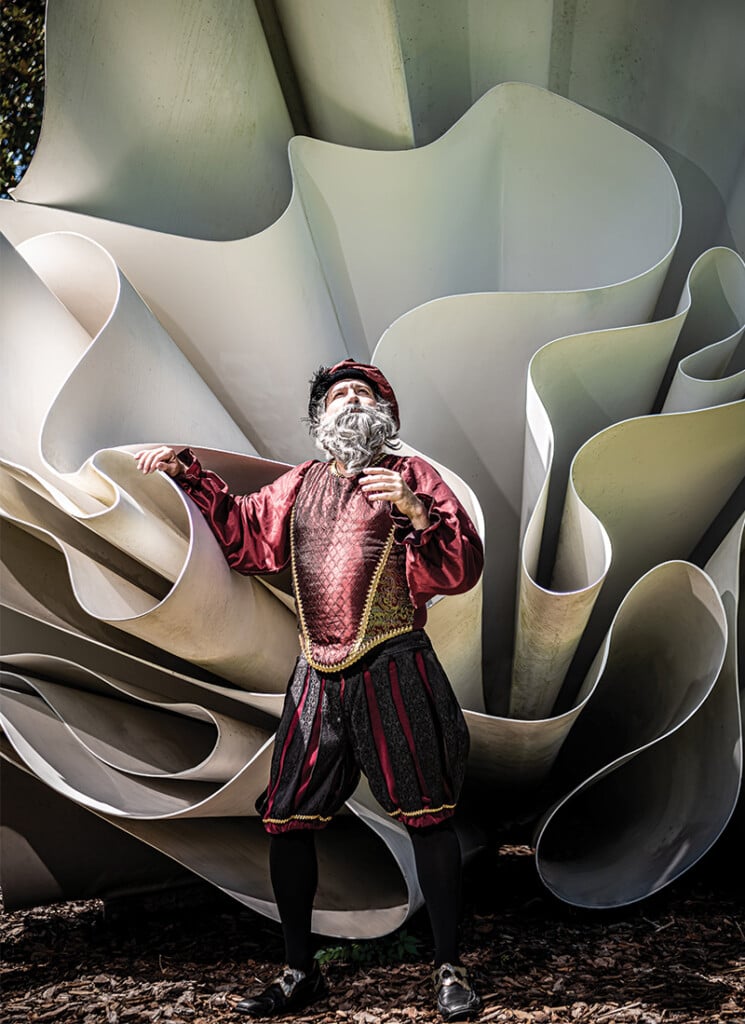
The House that Freedoms Built explores the history and legacy of colonialism in the Caribbean, particularly on the island of St. Croix, which was a Danish colony for 200 years before becoming a United States territory, now through January 3, 2027. Courtesy Rollins Museum Of Art
AS THE ROLLINS MUSEUM OF ART PREPARES FOR ONE OF THE MOST SIGNIFICANT MILESTONES IN ITS HISTORY—the opening of a new purpose-built museum in January 2028 — its 2026-27 season offers audiences a preview of the institution’s future through a series of exhibitions that treat architecture itself as an artistic medium.
Rather than viewing galleries as neutral spaces for displaying artwork, the Winter Park museum is inviting visitors to experience art that transforms, questions and reimagines the environments around them. Leslie Anderson, the museum’s Bruce A. Beal Executive Director, said the season centers on “art that thinks architecturally,” exploring the relationship between artists, place and the built environment.
“The defining vision of the Rollins Museum of Art’s 2026-27 season is art that thinks architecturally,” Anderson said. “Across exhibitions and public programs, the Museum is exploring how artists engage space, environment, and the built world, transforming architecture from a backdrop into an active medium for artistic inquiry and audience experience.”

The House that Freedoms Built explores the history and legacy of colonialism in the Caribbean, particularly on the island of St. Croix, which was a Danish colony for 200 years before becoming a United States territory, now through January 3, 2027.
The season begins with The House That Freedoms Built by artist La Vaughn Belle, an outdoor installation that debuted at the Smithsonian Design Triennial before arriving at Rollins this summer. On view through early January 2027, the installation launches a multiyear exploration of how artists interpret architecture, memory and identity.
That conversation continues in September with To Imagine a Home, an exhibition drawn from the museum’s permanent collection that expands on Belle’s themes of home, belonging, freedom and cultural identity. Together, the exhibitions establish a framework for a season in which architecture functions as both subject matter and creative strategy.
The museum’s architectural vision reaches its fullest expression in 2027 with two immersive exhibitions that transform the entire building.
In January, Norwegian artist Anne-Karin Furunes will present monumental landscapes inspired by scientific photography of the Svalbard archipelago. Through dramatic scale, shifting light and altered perception, the exhibition reimagines the galleries as an experiential environment.
Later, in June, Florida- and Cuba-based artist Lilian García-Roig will fill the museum with expansive paintings that blur abstraction and representation while inviting visitors to physically navigate themes of place, memory and identity.
According to Anderson, these installations reflect the museum’s decision to embrace experimentation during a period when many institutions would be slowing down in anticipation of a major move.
“While many museums scale back or temporarily close in preparation for a facility move, the Rollins Museum of Art is taking the opposite approach,” Anderson said. “We are remaining fully engaged and using this pivotal period to introduce the public to the artistic vision that will define our new facility when it opens in 2028.”
Throughout the season, the museum hopes visitors will see art as more than something to observe.

The House that Freedoms Built explores the history and legacy of colonialism in the Caribbean, particularly on the island of St. Croix, which was a Danish colony for 200 years before becoming a United States territory, now through January 3, 2027. Courtesy Rollins Museum Of Art
“We hope audiences leave with a renewed sense of curiosity about how art shapes our understanding of place, identity, and belonging,” Anderson said. “This season invites visitors to slow down and experience art not simply as something to observe, but as something to move through, question, and inhabit.” “Orlando audiences should be excited because this is not a typical exhibition season,” Anderson said. “It is a period of experimentation, transformation, and possibility. The community will have front-row access to the ideas, artworks, and creative processes that are shaping the future of the RMA.”
As the countdown to the museum’s new home continues, the 2026-27 season serves as both a celebration of the institution’s present and a blueprint for its future — one in which art, architecture and community become inseparable parts of the same experience.