Explore EPCOT’s Living With The Land Through Photos
EPCOT’s Living With the Land consistently diverts 99 percent of its waste from landfills each year and maintains a Platinum-level Zero Waste certification.
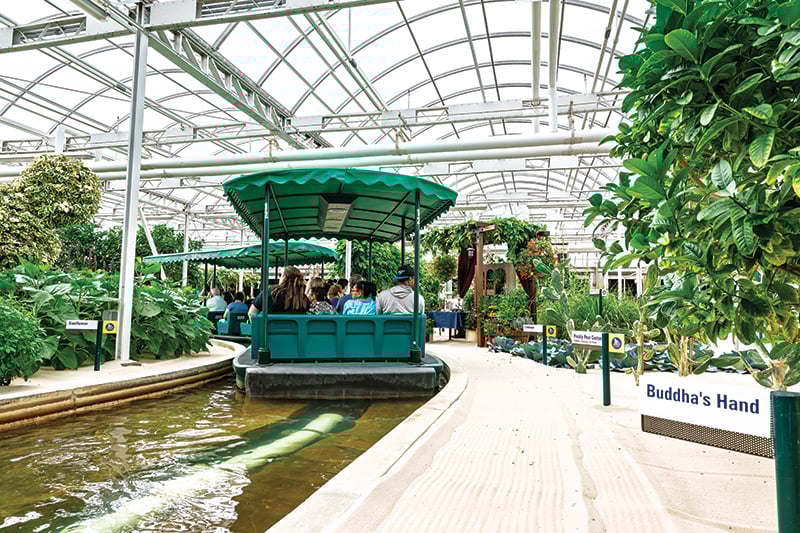
Living With the Land’s track takes visitors through a variety of greenhouses that use hydroponics, aquaponics, aeroponics and more.
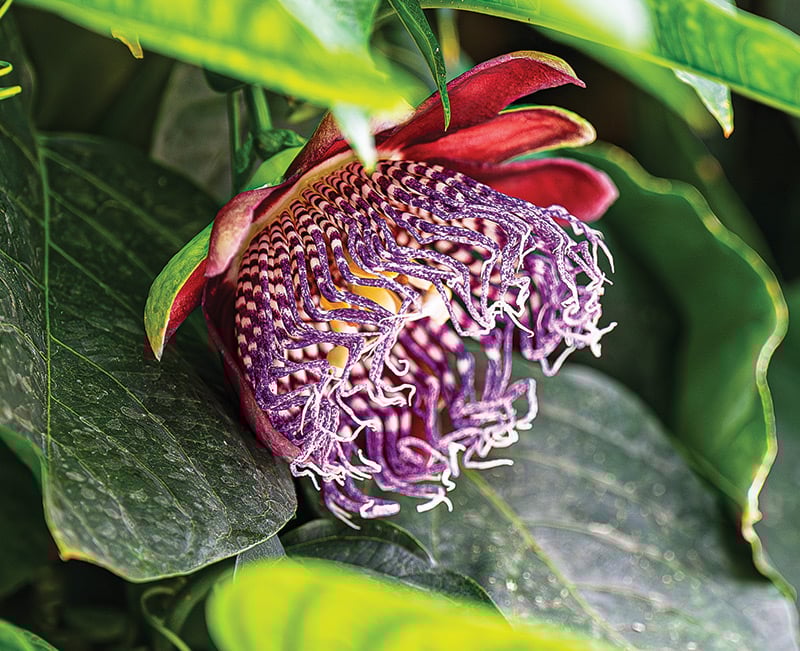
Close up of a purple passionflower.
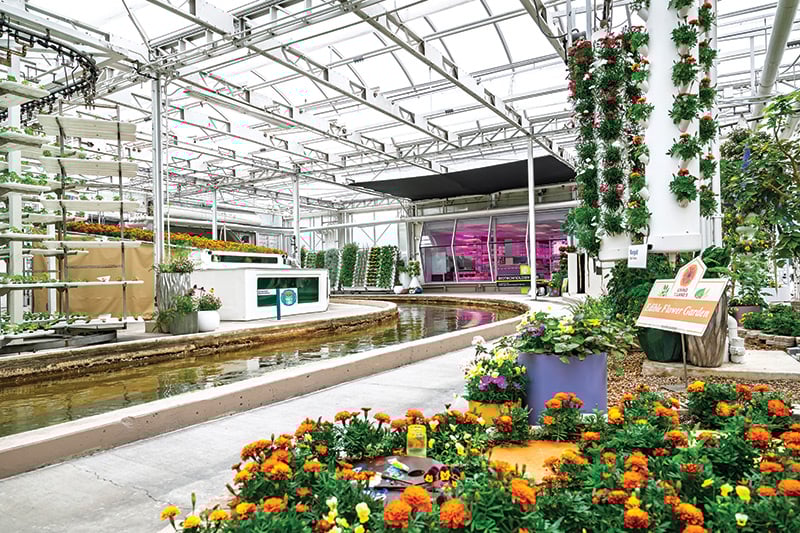
Living With the Land’s track takes visitors through a variety of greenhouses that use hydroponics, aquaponics, aeroponics and more.

Different varieties of kale grow in an aeroponic garden, moving around the greenhouse on tracks getting sprayed by a nutrient rich water.
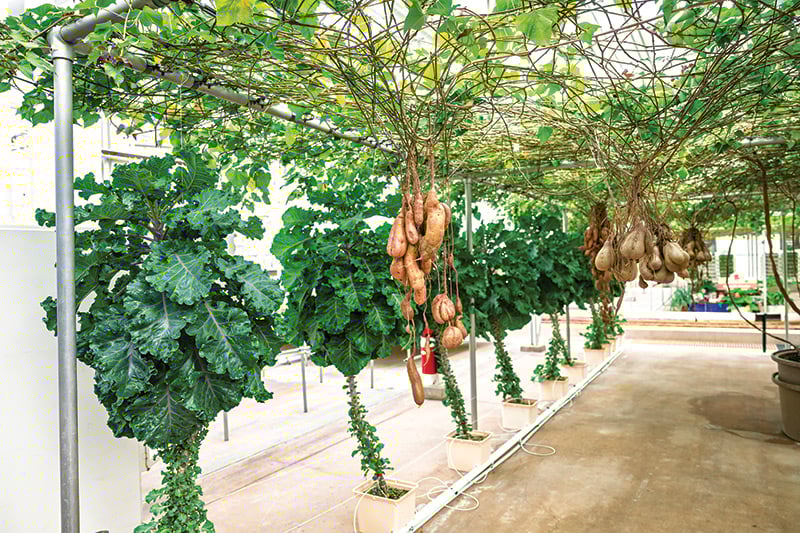
Sweet potatoes grow to gigantic proportions. All of the produce harvested in Living With the Land’s greenhouses are either used in Disney restaurants or sent to the Animal Nutrition Center to be fed out to animals.
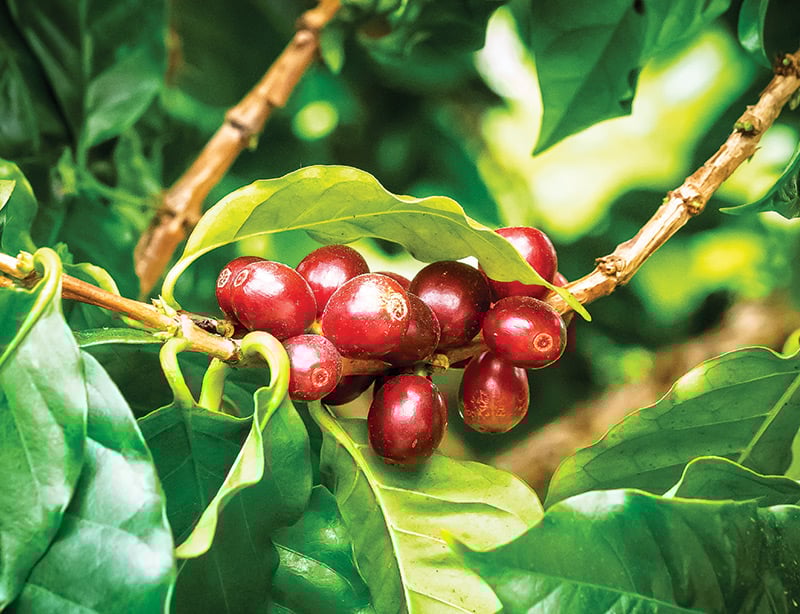
Coffee beans thrive in Living With the Land’s sand-based hydroponic systems. Kleiss says it was once believed that coffee could only thrive at specific higher altitudes, but her team has proven otherwise.
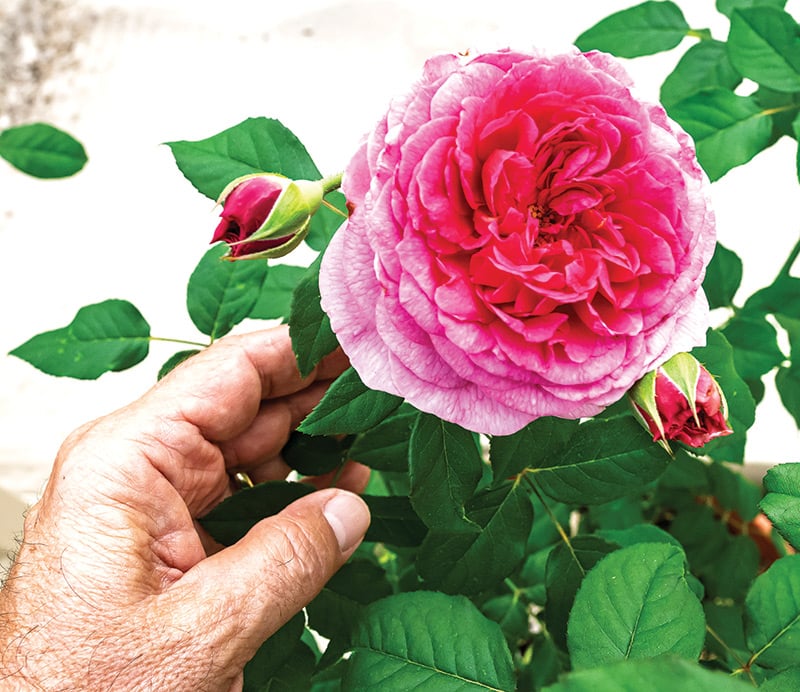
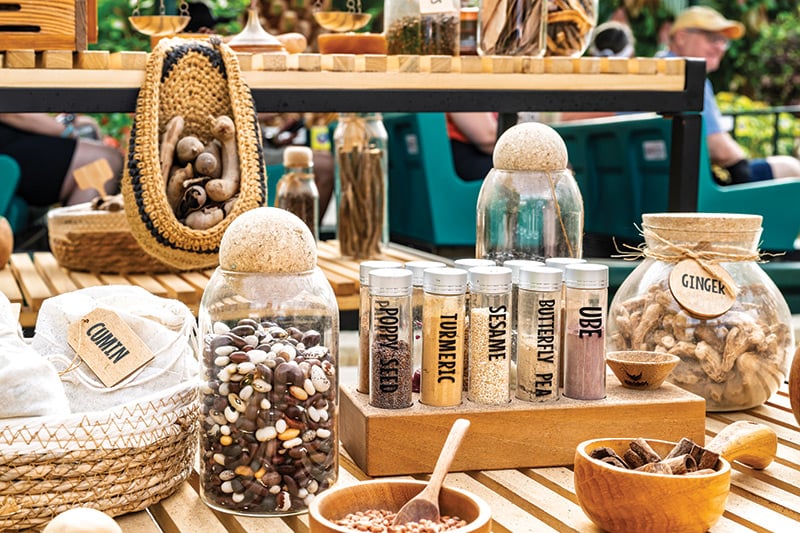
Living With the Land’s greenhouses yield much more than produce. Seen here are a portion of the spices, beans and other dried items produced by the innovative farming techniques. Has the ride left you hungering for more? Explore the future of agriculture on a backstage walking tour of The Land Pavilion.
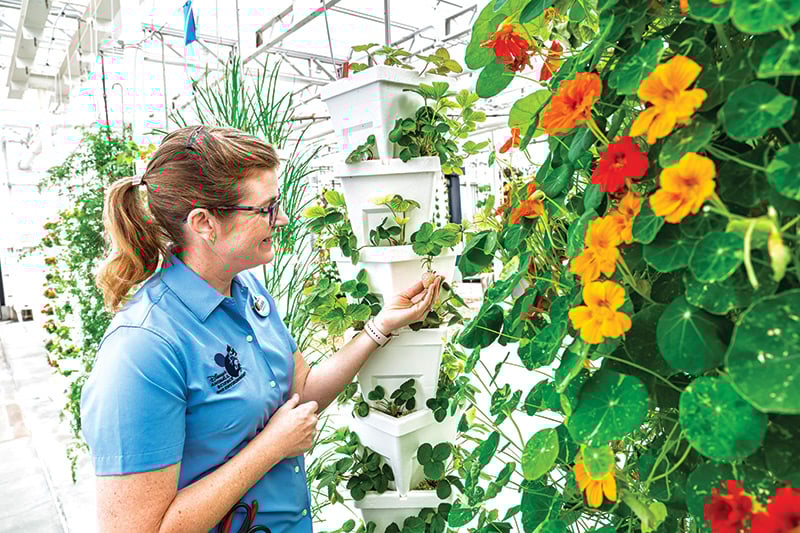
How does the team decide which crops or plants to feature in the greenhouses? How often do they rotate or change them?
Every crop grown in our greenhouses must be either edible or agriculturally significant. We aim to feature a mix of both familiar and lesser-known crops—plants that guests will recognize, be curious to taste or be amazed to see growing. Once we select a crop, we place it in the greenhouse environment that best suits its needs. For instance, a tropical crop would naturally thrive in our Tropics greenhouse. We also rotate and introduce new crops throughout the year, especially during EPCOT festivals. For example, we may showcase a crop that’s featured in a dish served at the EPCOT International Food & Wine Festival to create a deeper connection for guests.
Can you share any behind-the-scenes innovations or techniques being tested right now that aren’t visible to guests?
We’re constantly testing new hydroponic growing systems, technologies and conducting variety trials to evaluate which crops perform best under Florida’s unique conditions. Right now, we’re trialing six different cucumber varieties to assess their resistance to local pests and heat stress. While these varieties might thrive in cooler climates up north, we need to ensure they can succeed here before showcasing them to guests. We’re conducting similar trials with different eggplant varieties as well, comparing their resilience and yield potential.
What happens to the food grown here—how much of it is actually used in Disney restaurants, and which ones?
All of the produce we harvest is used either in Disney restaurants or sent to the Animal Nutrition Center to be fed out to animals at Disney’s Animal Kingdom, Disney’s Animal Kingdom Lodge and The Seas with Nemo & Friends. The majority goes to our on-property restaurants, while about 10 percent is allocated to the Animal Nutrition Center. This smaller portion often includes unique items that aren’t commonly used in restaurant kitchens, such as grains, sunflower heads or sugarcane stalks.
How do you incorporate sustainability and conservation into the daily operations of Living With the Land?
Sustainability is at the heart of everything we do at Agricultural Sciences. From innovative hydroponic systems to integrated pest management practices, we strive to model responsible and regenerative agriculture every day. Our commitment extends far beyond our growing techniques—since 2015, we’ve proudly maintained Platinum-level Zero Waste certification, consistently diverting over 99 percent of our waste from landfills each year.
This achievement is driven by the passion and dedication of our Cast Members, who carefully sort materials into 15 different waste streams. Whether it’s composting green waste or recycling items like plant twine, we ensure that every material is thoughtfully repurposed.
As the first department at Walt Disney World to achieve certified Zero Waste status, we’re honored to serve as a sustainability model for the entire company. Our efforts support Disney’s environmental goals, which aim to create a healthier planet through meaningful and measurable actions.
What’s the most unexpected or challenging plant you’ve successfully grown in the greenhouses?
Coffee continues to surprise and delight guests—even though we’ve been growing it for decades. It was once believed that coffee could only thrive at specific higher altitudes, but we’ve proven otherwise. Our sand-based hydroponic systems and carefully maintained subtropical temperatures create an ideal environment for coffee to flourish. It’s a great example of how controlled environments can rewrite the rules of traditional agriculture.
