7 Steps to Take After a Cruise Ship Pool Injury

A cruise ship injury on a wet deck ends a vacation in the time it takes to stand up. So does a spa jet nobody has serviced, or a barrier that should be there and isn’t. Most of what explains the injury stays aboard the ship, and the ship doesn’t stay still.
1. Move to safety and get urgent help
Leave the water if you can do it without making the injury worse. If you can’t, whoever is with you should call the ship’s emergency number and flag down the nearest crew member; that number is usually printed on the cabin phone and in the daily program.
Some symptoms outrank everything else on this list. Trouble breathing or loss of consciousness means emergency care right now. So does heavy bleeding. Severe head or neck pain and new weakness on one side of the body belong in the same category.
If you were submerged or inhaled water, ask for an evaluation even if you seem to recover on your own. The CDC’s drowning guidance explains that nonfatal drowning can cause serious health effects. Don’t sleep off breathing trouble after submersion.
Water emergencies at sea are rare, but for Central Florida residents sailing out of nearby hubs like Port Canaveral or Port Tampa Bay, pool deck hazards remain a real risk. While major lines operating from local ports have expanded lifeguard coverage in recent years, wet decks and pool areas still account for a substantial portion of onboard slip, fall, and submersion injuries.
2. Visit the ship’s medical center
Go even if you think you’re fine, especially if you think you’re fine. The visit creates a time-stamped account of what happened, and a clinician may spot an injury that hasn’t started hurting yet.
Describe the event plainly and name every part of your body that took an impact. Keep the receipts, both for treatment and for anything the clinic prescribes or sells you. If the staff recommend evacuation or care ashore, ask for it in writing, and do the same for any follow-up they want scheduled.
A three-year review of records from one cruise ship’s medical center found that falls (slips and trips included) accounted for 44.8% of passenger injuries treated onboard. That’s one ship’s dataset, not a current industry-wide rate.
3. Photograph the pool area before it changes
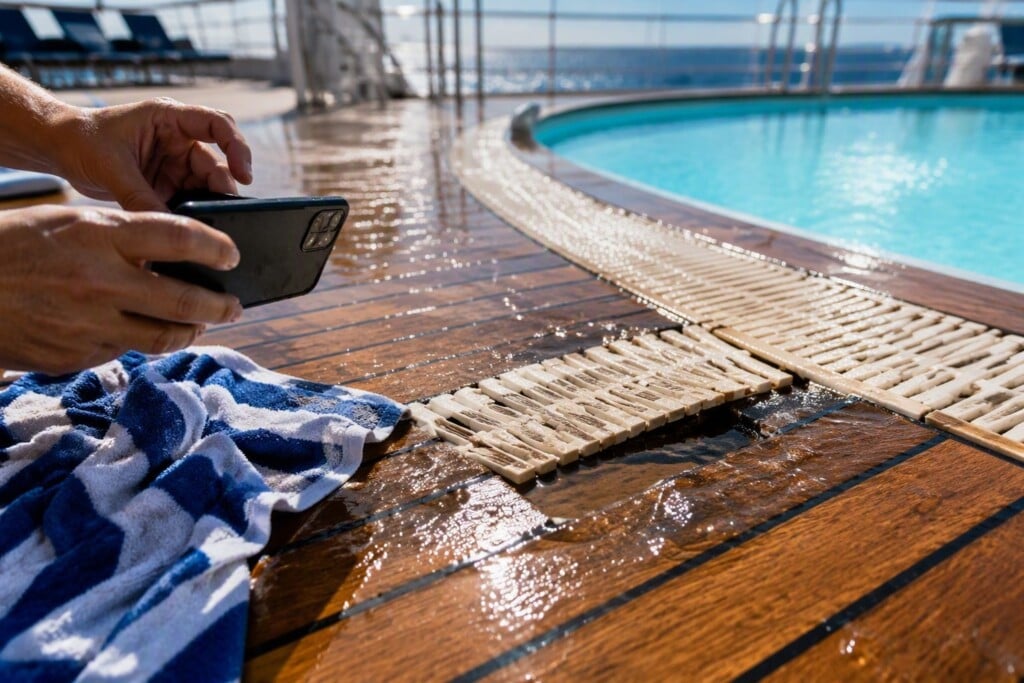
When documenting a cruise ship injury, start as soon as you can do so safely. Conditions change fast. Decks get dried, and warning cones appear. Broken equipment gets taped off, and within a short time the scene looks nothing like it did when you fell.
Photographs taken in the first few minutes are worth more than any description you write a week later, because a passenger injured at the pool on a cruise ship is usually describing a surface that no longer exists.
If you’re hurt, hand your phone to a travel companion. Don’t walk the deck taking pictures yourself if moving could worsen the injury. Capture:
- Wide shots showing where it happened and what surrounds it
- Close-ups of the surface and of any broken equipment or missing barrier
- Visible injuries and damaged personal property
- Nearby cameras and the deck signage
- How well the area was lit, plus time-stamped video of leaking water or other changing conditions
Don’t step into crew-only areas or get in the way of a rescue. Keep the original files uncropped and unfiltered, and back them up when you have a secure connection.
4. Collect witness and crew details
Get each witness’s full name and a reliable way to reach that person after the voyage. Ask what they saw and write the answer down in their own words, not yours. Don’t coach anyone, and don’t ask who they think was at fault.
Note which crew members responded. If someone won’t give you a full name, write down the job title and the approximate time you spoke, then describe the uniform and where the person was working.
Write your own account while it’s fresh, in a phone note or an email to yourself. Note the time and the place. Describe what the deck looked like and what the weather was doing, then set out the events in the order they happened.
Pool supervision varies by ship and cruise line. Major family-oriented lines like Disney, Royal Caribbean, and Norwegian staff lifeguards on main pool decks, but smaller pools or adult-only zones may remain unmonitored. Note whether active supervision was present when the injury occurred.
5. File a cruise ship injury incident report
How to report a cruise ship accident depends on the ship. Guest services is the usual starting point, though on some ships security takes it. The medical staff or the officer responsible for that deck may handle it instead. Give a factual account and ask for written confirmation that the report was received.
Read it before you sign. Correct anything inaccurate, and say “I don’t know” rather than guessing. Do not sign a document you cannot read or understand.
Staff doesn’t always hand over a copy. If they won’t, record when you asked, who you asked, and ask for a report or reference number. If you’re permitted, photograph the completed form before handing it over. Then send the cruise line a dated written account through an official customer-service channel, so a record exists outside the ship’s internal system.
Don’t assume every passenger is automatically entitled to an immediate copy. Keep your own record of the event and of the attempts you made to get theirs. Most importantly, do not give recorded statements to cruise line risk management or sign liability release waivers before consulting qualified legal counsel.
6. Request your medical and onboard records
When requesting cruise ship medical records, ask at the clinic desk before you disembark. Ask for instructions on obtaining clinical notes, test results, treatment instructions, prescriptions, and billing records. Do it in person rather than from home a month later.
Submitting a request doesn’t necessarily create a right to immediate production. Medical care aboard a vessel in international waters is governed by maritime law rather than Florida statutes. If your injury requires offboarding at a port of call, international emergency care and medical air evacuation can mean tens of thousands of dollars out of pocket; verify your travel insurance coverage immediately and retain all foreign transport and clinic receipts.
If records are delayed or unavailable
Submit a dated written request and keep proof that you sent it.
Note the name or department that received it. Follow up through the cruise line’s official process rather than relying on a crew member’s verbal promise. And don’t assume a particular turnaround time unless applicable law or the provider’s policy sets one.
7. Keep ticket contract after cruise injury and continue medical follow-up
Keep the ticket contract. It may specify where notices must be sent and how they must be delivered. It may also name the court or forum where a dispute gets heard.
Keep the rest of the paperwork too: the booking confirmation, the itinerary, boarding documents, luggage records and every email the cruise line sends you.
Don’t rely on generic deadline summaries online. Under federal maritime law (46 U.S.C. § 30526), passenger ticket contracts lawfully shorten injury claims to one year to file a lawsuit and six months to provide formal written notice. These contracts also enforce forum-selection clauses that dictate where claims must be litigated. For itineraries out of Port Canaveral or Tampa, contracts routinely designate federal courts in Florida—such as the U.S. District Court for the Middle District in Orlando or the Southern District in Miami—as the exclusive forum (a practice upheld in Carnival Cruise Lines, Inc. v. Shute).
If the injury gets worse after the trip
See a clinician promptly and preserve the records documenting the new symptoms and their possible connection to what happened aboard.
Tell that clinician what happened on the ship and when. Keep every diagnosis and scan, and keep the bills. Write down the date your symptoms changed instead of trying to reconstruct the timeline months later.
Preserve what you can before leaving the ship
The ship keeps sailing. The deck gets cleaned, and the crew rotates off. Care for the injury first, then build the record while the details are still in reach, because what you can establish a year from now depends on what you documented while you were still aboard.