
IN THE MID-1960S, ORLANDO WAS STILL A RELATIVELY QUIET CENTRAL FLORIDA CITY. Downtown was the unquestioned center of commerce. Orange groves stretched for miles beyond the city limits. Tourists arrived, but not yet in the numbers that would redefine this area. Few could have imagined that within two decades Orlando would become one of the fastest-growing metropolitan areas in America.
Neither could many have predicted the role Orlando magazine would play in documenting that transformation.

The cover of Orlando-Land’s November 1971 issue.
The publication’s roots stretched back to 1946, but by 1962 a pivotal change occurred when Associated Press journalist Edward L. Prizer purchased what was then known as The Orlando-Winter Park Attraction for $17,000. Operating from his home with his wife, Artice, Prizer saw something others had not yet fully grasped: Central Florida was on the verge of becoming something much larger than a seasonal destination for winter visitors.
Still, growth was far from guaranteed. Throughout the mid-1960s, Orlando remained a modest Southern city. Martin Marietta was a major employer. Citrus remained king. Central Florida was growing, but slowly. The magazine struggled financially, even as Prizer experimented with new ideas, including one innovation that would prove critical to its survival: selling real estate advertising in a magazine format rather than relying solely on newspapers. Then everything changed.
“Here in Florida, we have something special we never enjoyed at Disneyland – the blessing of size. There is enough land here to hold all the ideas and plans we can possibly imagine.” —Walt Disney
In 1969, the Orlando Chamber of Commerce intensified efforts to market the area as a tourist destination. Around the same time, Walt Disney’s plans for a massive Central Florida development became public. Prizer recognized the significance immediately. With little money and considerable risk, he transformed the publication into a full-sized city magazine called Orlando-Land. The first issue appeared in November 1969 while Walt Disney World was still under construction. According to Prizer, he had just $129 in his bank account at the time.
It was a gamble that paid off. Advertising surged. New businesses arrived seemingly every month. The magazine moved out of the Prizer home and into offices in Winter Park. A full staff began taking shape. As Orlando expanded, so did the publication’s ambitions.
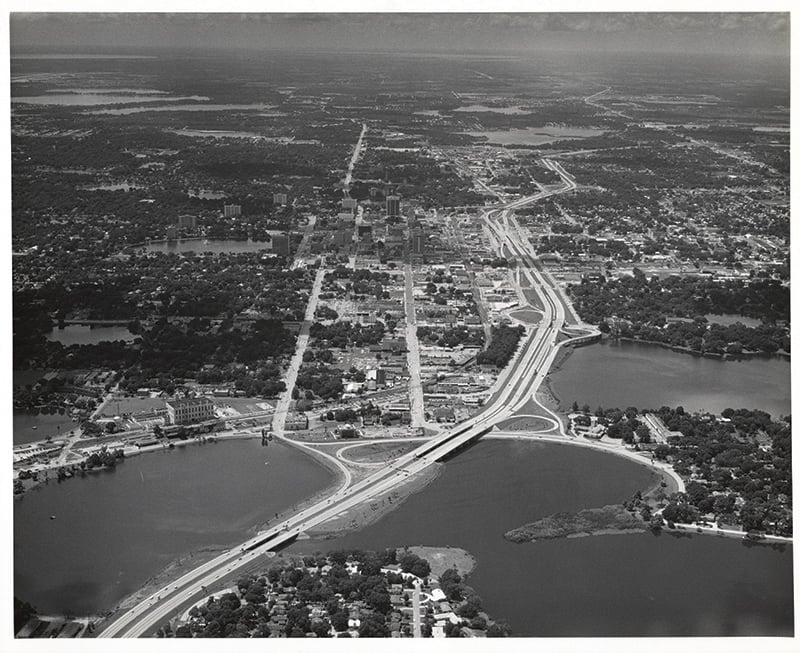
An aerial photograph looking south above Interstate 4 toward downtown Orlando, ca. 1970. Courtesy Orange County Regional History Center
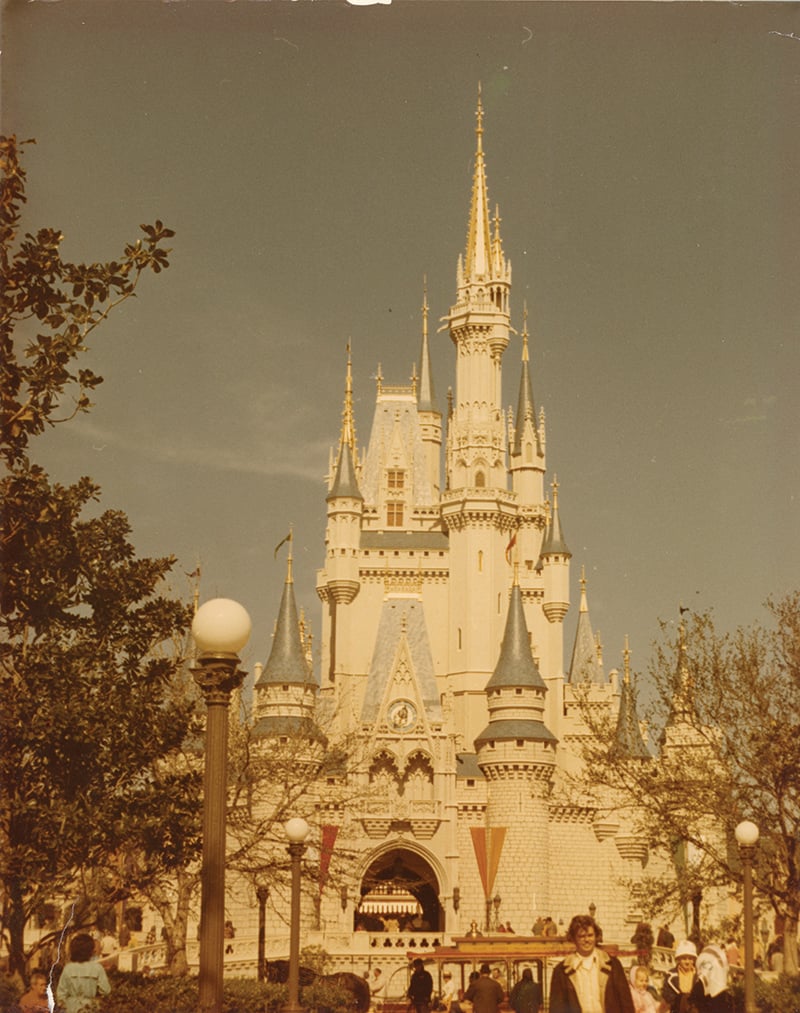
Cinderella’s Castle at Walt Disney World’s Magic Kingdom, ca. 1970s. Courtesy Orange County Regional History Center
The 1970s would become a defining decade for both. Longtime staff members Carole DePinto and Elaine Schooping remembered those early Orlando-Land years as equal parts exciting and exhausting. The operation remained lean. For several years, much of the magazine was produced from a spare bedroom in Prizer’s Maitland home. Staff members wrote stories, designed layouts, proofread copy, sold advertising and handled production duties, often using little more than Selectric typewriters and determination.
Rather than maintain a detached journalistic distance, many stories were written in the first person. Readers came to know the writers almost as neighbors. DePinto’s restaurant reviews and Schooping’s arts coverage became familiar companions for a growing readership trying to make sense of a rapidly changing city. The timing could not have been better.
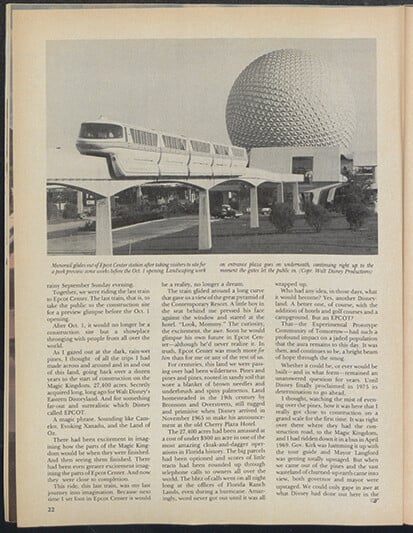
When Walt Disney World opened in October 1971, Orlando was thrust onto the national stage. New hotels, restaurants and attractions emerged at a pace locals had never witnessed. Orlando-Land covered it all. The magazine regularly featured Disney developments and became a monthly record of the city’s evolution from regional center to international destination. But the story was never just about Disney.
As subdivisions pushed farther into former pastureland and orange groves, Orlando-Land chronicled the people building the new Central Florida. Developers, civic leaders, restaurateurs, artists and entrepreneurs all found space in its pages. The publication became both a mirror and a scrapbook for a community experiencing unprecedented change.
By the late 1970s, Orlando’s identity was beginning to shift. What had once been considered a small Southern city was becoming a major metropolitan area. Downtown construction accelerated. New office towers appeared. International Drive expanded. Population growth transformed neighborhoods and created entirely new ones. The magazine evolved alongside it.
In 1981, Orlando-Land officially became Orlando magazine, a name that reflected the city’s growing confidence and maturity. The change was more than cosmetic. It symbolized the transition from a publication covering a developing town to one chronicling an emerging city.

The February 1986 cover of Orlando magazine featuring a rendering of a future Florida Mall, which opened later that same year. Orlando Magazine Archive.
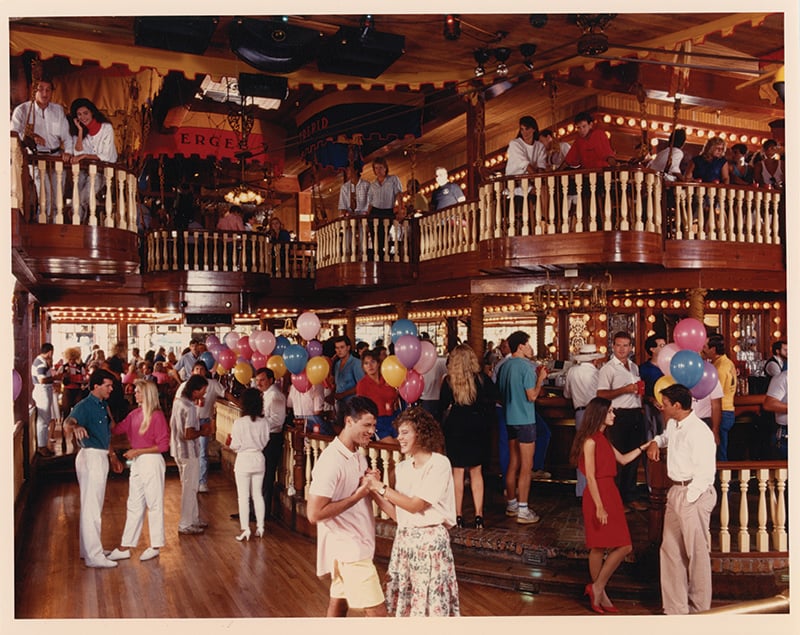
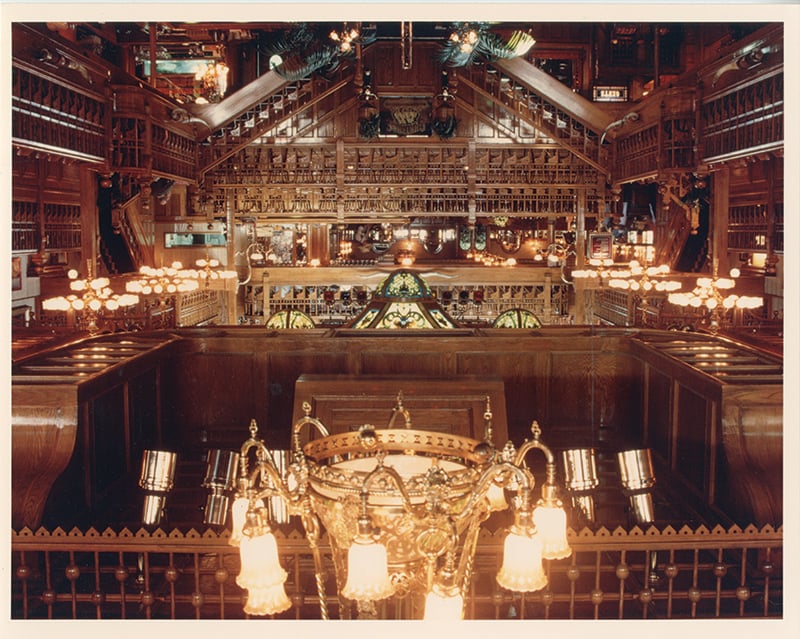
The 1980s brought another wave of growth. Downtown Orlando entered what many locals still remember as its golden era. Church Street Station became one of Florida’s premier entertainment destinations, drawing visitors from across the country and helping transform downtown into a nightlife and tourism hub. Church Street Station owner Bob Snow, said on the opening of his $3.5 million Cheyenne Saloon, “you do something well enough, beautiful enough, and people will line up. I could have done it for much, much less. But I don’t think people would have lined up. I’m afraid to do less, because someday Central Florida will be the entertainment capital of the world.” Snow expanded Church Street Station in 1988 to include a shopping emporium, then during the next year sold his stake in the entertainment complex. A refurbished Cheyenne Saloon & Opera House reopened in 2008, closing just a year later. At the time, the energy surrounding Church Street reflected a broader optimism throughout the city. Orlando was no longer merely growing. It was thriving. And Orlando magazine was there to document it.
Coverage expanded beyond growth and development into dining, culture, entertainment and the increasingly sophisticated lifestyle of a city coming into its own. The publication’s pages reflected a community that had become larger, more diverse and more ambitious than anyone could have imagined twenty years earlier.
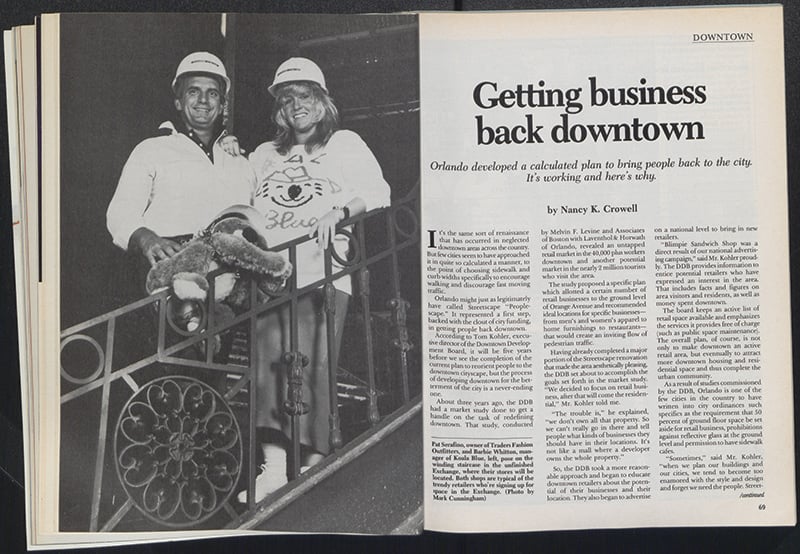
One milestone arrived in November 1987 with the introduction of the Silver Skillet Awards, a reader-driven dining competition that served as a precursor to today’s Dining Awards. More than 200 restaurants participated, signaling just how dramatically Orlando’s culinary scene had evolved since the days when dining options were relatively limited. The inaugural winner, Royal Orleans at Mercado, represented a hospitality industry growing alongside the city’s tourism economy.
The following year marked another turning point. In 1988, after nearly three decades guiding the publication through one of the most remarkable growth periods in American city history, Edward Prizer sold Orlando magazine for $1.7 million. By then, both the city and the magazine were almost unrecognizable from the versions that existed when he purchased the struggling publication in 1962.

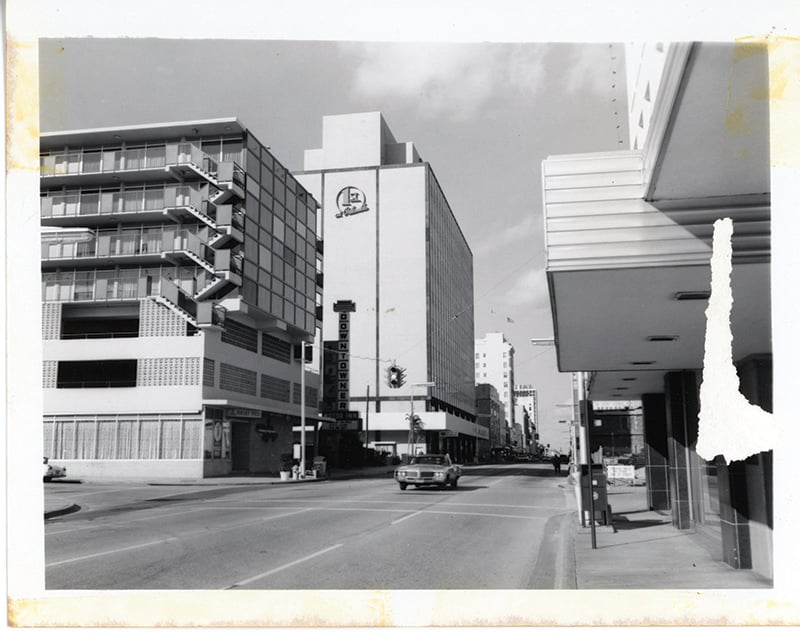
Apostcard from Orlando, ca. 1960. Courtesy Orange County Regional History Center
The story of Orlando magazine during those years is, in many ways, the story of Orlando itself.
Both began as modest local institutions. Both took risks. Both bet on the future of Central Florida. And both emerged from the 1960s, 1970s and early 1980s transformed by one of the most extraordinary periods of growth any American city has ever experienced.
As Orlando grew from citrus town to international destination, its hometown magazine grew right alongside it, preserving the stories, personalities and milestones that shaped the city we know today.